
Gathering information takes on a new level of complexity when overtaking as we take into account factors such as:
• The driver of the overtaken vehicle may not be aware of our presence and could change speed or direction at any time.
• There may be vehicles behind us that are also considering overtaking.
• At national speed limits, closing speeds with opposing traffic could be 120 mph or higher.
• There is a risk from cars emerging from side roads or laybys that are not expecting to see a motorcycle on the ‘wrong side of the road’.
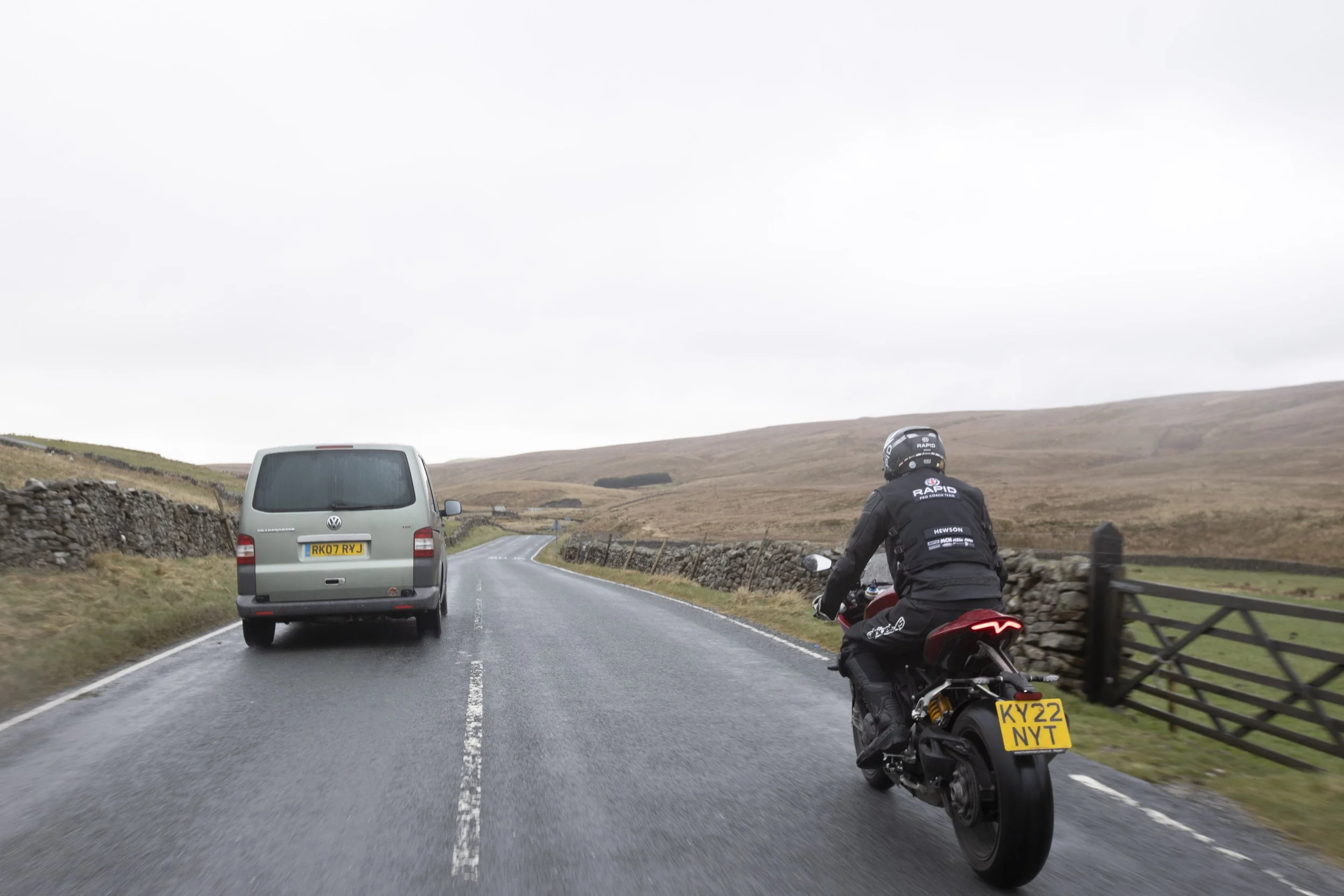
Momentum Overtake
A Momentum Overtake involves timing our approach to maintain the majority of our speed as we arrive at, and pass the other vehicle. This requires us to see the vehicle very early, assess its speed and look way beyond the vehicle to identify other hazards we need to be aware of. As we get closer we adjust our position to achieve maximum view of the road beyond the vehicle to be overtaken, and adjust our speed by using throttle control to time our approach.
Having ensured the road is clear of other hazards, we move smoothly out to the offside lane* to optimise our view and give maximum clearance from the overtaken vehicle, and we complete the overtake.
*There are many occasions where, in order to extend the view, the rider would position to the offside a long way before arriving at the vehicle to be overtaken.

Staged overtake
If we are already in a following position behind the vehicle we wish to overtake, the technique for overtaking is different. There are several stages we must work through to get the overtake completed including:
1. Positioning for view whilst behind the vehicle.
2. Moving to the offside of the road to extend the view prior to the overtake.
3. Completing the overtake.
Positioning for view whilst behind the vehicle
If we are already in a following position behind the vehicle we wish to overtake, our goal is to position the bike so that we can collect as much information as possible about the road ahead and identify the first safe opportunity available to us. Many riders miss opportunities because they have closed the gap on the vehicle to be overtaken at the expense of the best view of the road ahead. Especially with large vehicles or on bends, riding too close reduces your view significantly. It also restricts the rider’s flexibility to control their speed, forcing them to match that of the vehicle ahead. It is far better for safety and progress to maintain more distance, maximise the view, have more flexibility over speed and maintain a better safety margin.
On the way into bends, a rider wanting to make progress will be anticipating the possibility of an opportunity opening up after the bend and will want to be ready to go at the earliest safe chance. A significant benefit can be achieved by maintaining a good distance behind the vehicle ahead and moving the bike around on the approach to the bend to find the earliest view through. For example, on a left hand bend, this is often achieved by keeping to the nearside of the lane and looking through the inside of the vehicle ahead to gain and early glance of the road opening up.
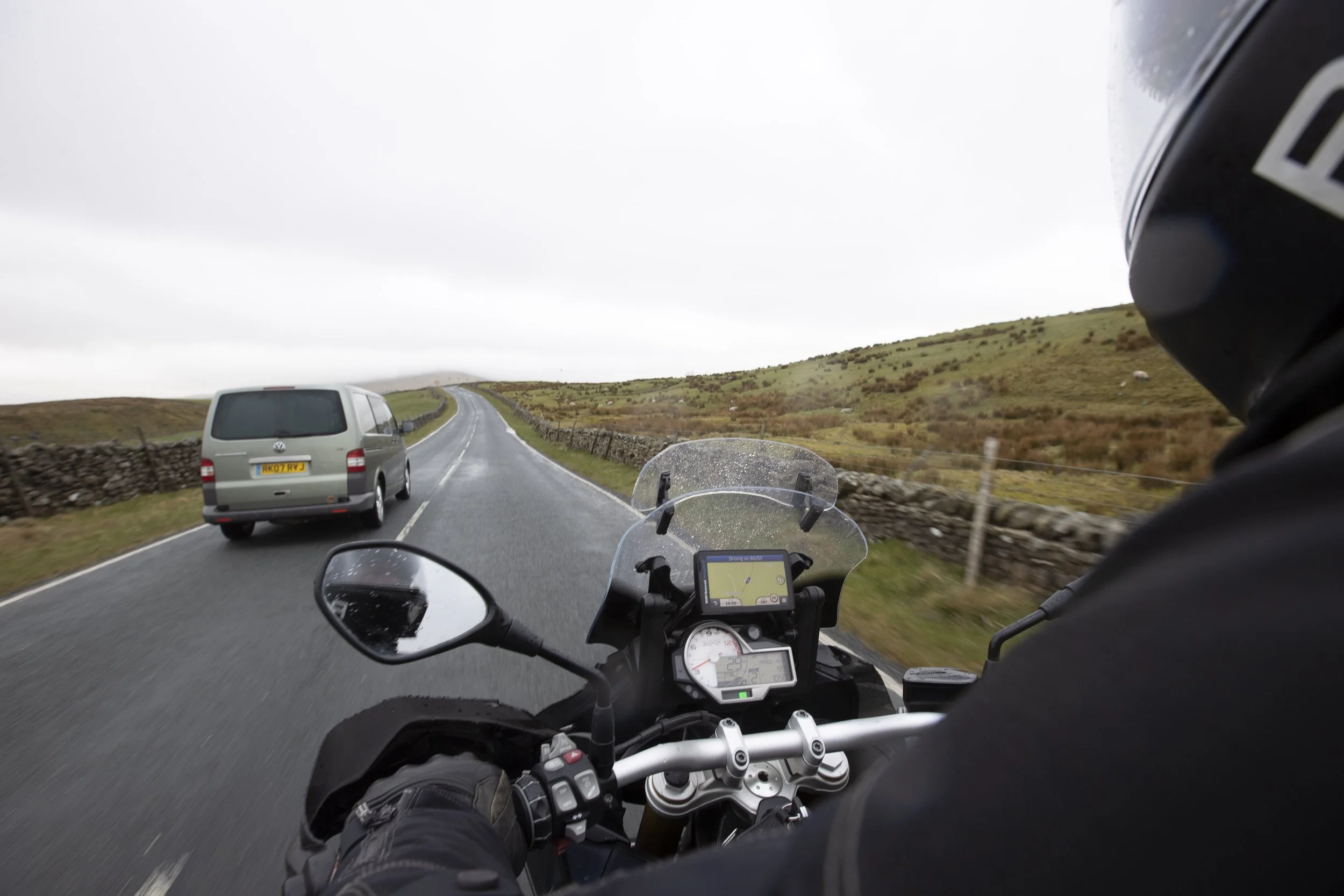
Moving to the offside
Once an opportunity has presented itself the rider should move out to the offside lane without immediately closing on the vehicle ahead*. A pause in the offside position allows the rider to validate the opportunity. If the road is clear, the rider passes the vehicle giving as much clearance as possible, if it is not, the rider can safely return to the following position.
Completing the overtake
In both a Momentum and Staged Overtake, the rider should use the width of the available road to keep well clear of the vehicle being overtaken. From this position, they should aim to ride in as straight a line as possible back to their target return spot (rather than swoop out and swoop back in). A great overtake should appear smooth and effortless with none of the drama of a poorly planned one.
*Riders often feel rushed into the overtake once they have moved to the offside. This stage of the overtake should be seen as positioning for view, NOT a commitment to overtake. As police riders we are expected to move out for the view as often as we feel appropriate without committing to the overtake. Getting used to using the width of the road to extend the view into the overtake is good practice. Separating this from the necessity to commit is essential. Likewise, once we have passed the vehicle we are overtaking, if it remains safe and legal, we should not feel obliged to rush to return to our ‘own side of the road’ if remaining in the offside position offers advantages to safety, stability, progress or view.
Looking to improve your motorcycle riding skills? We have a range of track and road development programmes to maximise your performance. Take a look at our road courses and track courses.