
MOTORCYCLE PRO GUIDE 10 - STEERING

Making Steering a Conscious Act
There is a lot we can do to improve our steering effectiveness and doing so will have a big impact on both stability and corner entry speed. Slow steering inputs cause the bike to run wide on corner entry forcing the rider to slow down or use additional lean angle to compensate. Rough steering inputs, and unnecessary steering corrections destabilise the bike, often when its already in its least stable state.
For many riders, motorbike steering is an unconscious act and they are not entirely sure how they steer the bike. But, if we don’t understand how we are steering, we can’t improve our riding skills through practice. Our goal is therefore to make steering a conscious act so that we understand exactly how we can improve our technique.
Counter Steering
Counter steering is the only efficient way to steer a bike at anything other than a slow speed. It delivers absolute accuracy over direction, an optimum turn rate, and as a result, the rider can safely carry more speed into a given radius. Conversely, slow steering causes a bike to run wide through a bend and this requires a slower entry speed to compensate, or requires the bike to have to lean further to correct the understeer.
The technique involves using a single push and release on the bar. Push the right bar forward to go right, push the left bar forward to go left.
Steering Efficiency
A forward push causes the bike to steer sharply. A downward push has no effect and the bike remains upright. Every degree of downward push reduces the effect of the forward push. So clean and accurate steering requires all of the force to be forward. A clean, forward push is far easier to achieve if the arm is parallel to the ground.
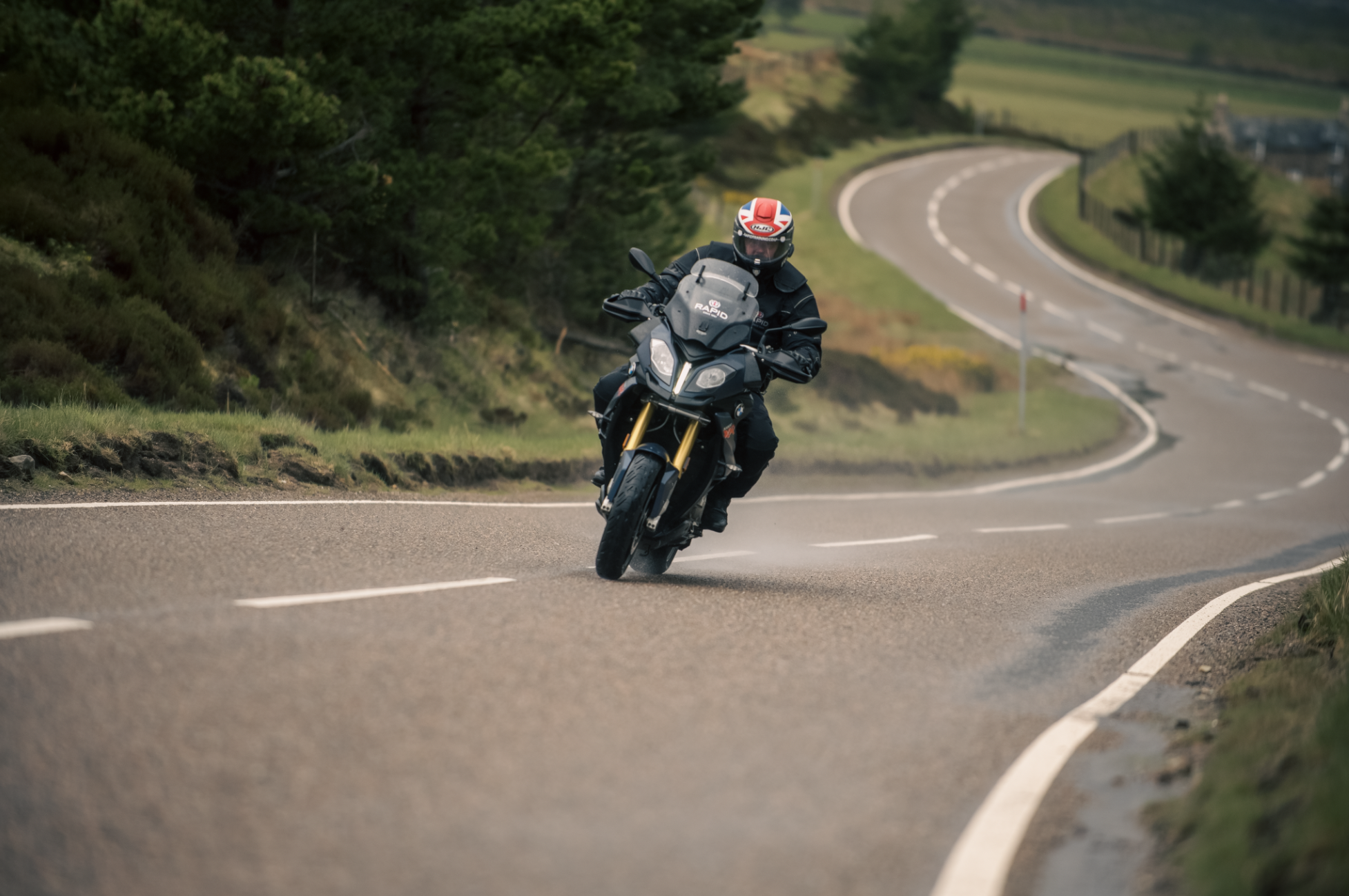
Body Position
Leaning out of a bend (negative position) ‘counters’ the steering input. This causes the bike to have to lean further to make the same bend at a given speed.
Leaning into a bend (positive position) enhances the steering action and reduces the lean angle required. Reduced lean angle means better stability and higher speed potential.
At road speeds, a neutral or slightly positive position is all that is needed to optimise the steering action, reduce the lean angle, and improve stability.
Single Input Steering
To optimise stability, our aim should be is to use one, single, steering input wherever possible.
This is because:
•If we enter a corner at any sort of pace, we are already using a substantial percentage of our available traction and further steering input risking destabilising the bike.
•The bike is most stable when we relax our grip on the bars and allow the front wheel to self-align.
The aim is to use one, precision steering input, release our grip and allow the bike to run freely around the bend.
Looking to improve your motorcycle riding skills? We have a range of track and road development programmes to maximise your performance. Take a look at our road courses and track courses.
We also have an exclusive opportunity to ride both the world famous IOM TT mountain course and the Southern 100 course with vastly experienced RAPID TT racers Dave Hewson and Martin Powell. Find out more.