
Bear with us. Don’t scoff. Because riding in winter can be very enjoyable, honest. The landscapes take on an altogether wilder, more dramatic mood and the roads are deserted gateways into the wilderness, and riding in challenging conditions brings with it huge reward and satisfaction. To prove the point, three Rapid coaches set off for a winter adventure in the Scottish Highlands, just before Christmas. Brian Glover-Smith reveals how to enjoy winter riding.
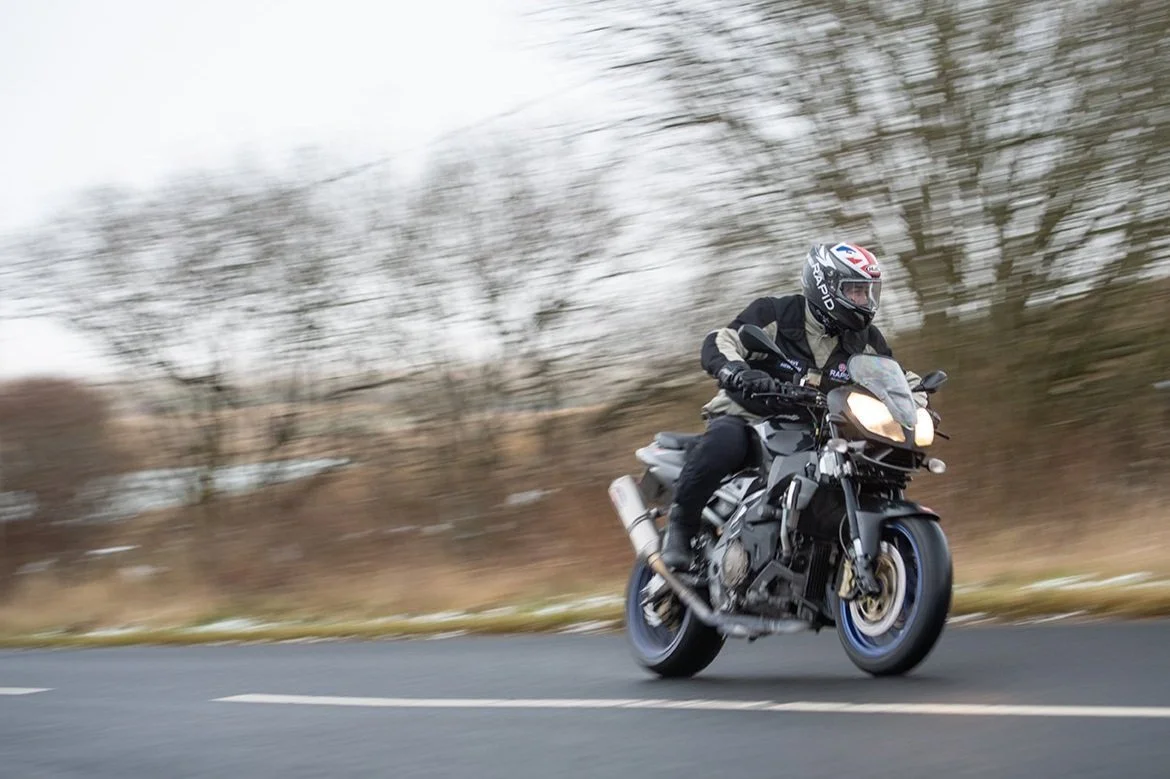
Setting off for the Highlands in -4°C and with snow on the ground doesn’t seem like fun, and isn’t it dangerous?
It’s all about the planning. We had three days’ riding planned and a look at the forecast revealed a warmer front pushing in, which meant by the middle of day one it’d be above freezing, reaching a balmy 4°C for the rest of the trip.
Another key thing to consider is your riding kit. One-piece leathers are a no-no, instead you want warm, waterproof textiles, and if possible heated grips and a heated vest: this makes all the difference to your riding, ensuring you’re less stiff and tense and instead more relaxed. This not only improves your comfort, but more importantly your level of machine control.

The right kit and accessories are essential to help you feel comfortable and relaxed in the cold.
But don’t you have to ride really, really slowly in the cold and wet, removing any enjoyment?
No, not really. A good set of winter tyres is essential, and then it’s all about how you ride. It’s about reading the road and allowing plenty of time and space for forward planning, and smooth machine control. In the wet or cold, cornering often involves picking a line that optimises traction rather than view, but it is surprising how much grip is available - much more than many riders realise - and so it is still possible to have an enjoyable ride.

There’s enormous satisfaction in knowing you can handle your bike in tricky conditions.
The enjoyment and sense of satisfaction can also come from the conditions. Feeling for grip and employing all of your skills to overcome the challenges of tricky road conditions leaves you with an enormous sense of satisfaction.
Couple of questions then, firstly, what do you mean by adjusting your line? Do you take a different line in the wet as opposed to the dry?
You can do, yes. Normally, in good conditions with lots of grip we aim to extend the view through the bend; the further we can see ahead, the faster and safer we can ride. But, in slippery conditions, we may compromise the best view and instead opt for a line with better traction by selecting drier, gripper parts of the road surface.
We also consider ‘squaring off’ corners where we can. This means running deeper into the corner on the brakes, scrubbing off more speed than we would normally, before turning the bike tighter, standing it up, and driving out hard. Slower and later entry into the corner means less time spent at full lean, but faster exit speeds as the bike is upright sooner, making up for the lower corner entry speed.
Okay. And do tyres really make that much of a difference? Aren’t they all black and round?
They make a huge difference. On the cold, wet roads of Scotland two of our trio were on Michelin’s Pilot Road 5s, outstanding sports touring tyres that require very little warmth to perform at their best in all conditions. The third in our party was on a hypersport tyre which struggled to generate grip on the cold wet roads.
Quality, condition, and pressures are also important factors. Tyre pressures drop in the cold conditions, and while some believe that improves grip thanks to an increased contact patch, that is not the case, as the closing of the tread pattern and sipes reduces the tyres ability to displace water. It is crucial your tyres are set to the correct pressures and are in good working condition.
So you genuinely enjoy riding in the winter?
Absolutely. Winter riding is so much more of an adventure. Up in the Highlands the busy roads, normally packed with tourists and campervans, were deserted and the rugged landscapes were even more daunting and moody to behold, making it just a more exciting ride.

It also takes a great deal of skill, and knowing that you are mastering the bike and the conditions, and in complete control is all part of the thrill. I think that’s why a lot of our courses are still busy in winter as riders recognise the fact that they can really develop their skills in winter.