
If you ride in Britain then you’ll inevitably end up riding in the rain. For many that means a dramatic decrease in speed and total absence of fun. But it need not be that way. In the second instalment of our winter riding series, we share our inside knowledge on how to be better in the wet.
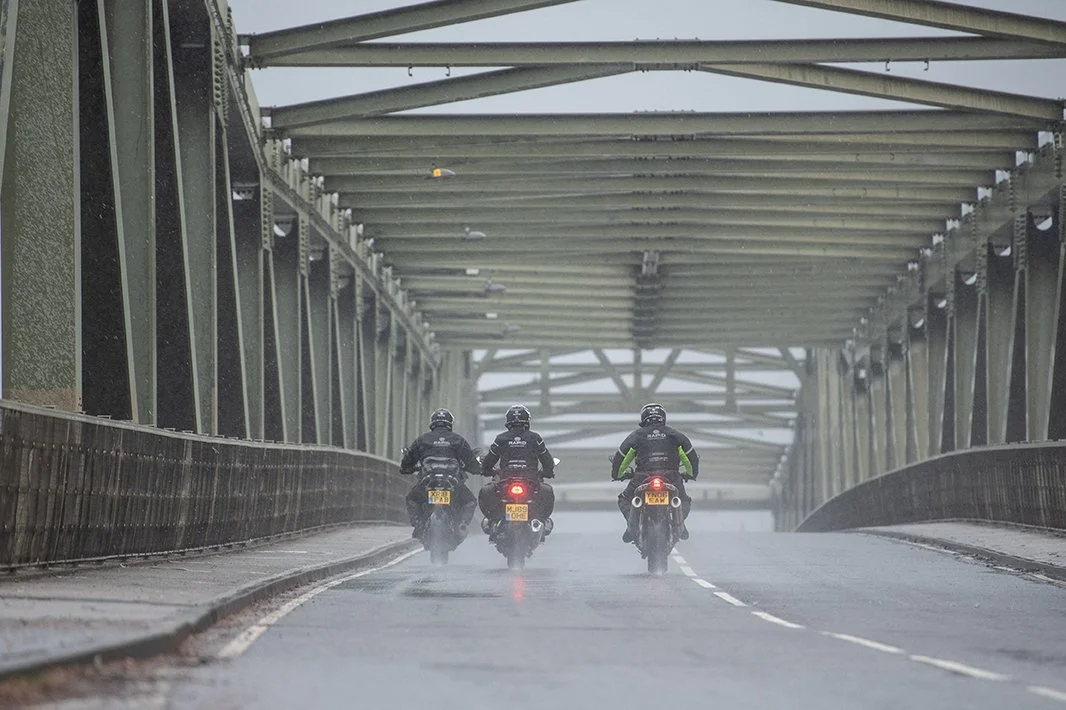
How much grip is there in the wet?
Quite a lot – usually a lot more than riders expect. The ‘stickiness’ of a road surface is measured by assessing its coefficient of friction (COF). On a good dry road we would expect a COF of around 0.7 – that’s a ratio of how much sideways force is required to move a block compared to its weight. If the road is wet, the COF would be reduced to about 0.5. Whilst 0.7 to 0.5 is significant - it’s not huge. In our experience, rider’s often over compensate for the wet road when cornering, but under compensate for the effect on braking. In other words, they slow down far more than is necessary when cornering, but ride the straights with little thought to the additional stopping distance they need. When cornering, as many riders rarely exceed 70% or so of the available traction in the dry, the amount the average rider has to slow down in the wet can be surprisingly little. But, our stopping distance can be greatly extended in the wet and because we must be able to stop in the distance we can see is clear – and our ability to stop is impaired, our speed must be adjusted accordingly.
Where is the grip? Is it better in places than others?
Yes. It’s the stones in the road that give the grip, not the tar - that’s just there to hold the stones in place - so you need to avoid parts that have been polished by the traffic. Likewise, road surfaces dry unevenly, and there are often dry sections of a road which offer better traction. As riders, we need to be actively searching out the best bit of road to ride on.
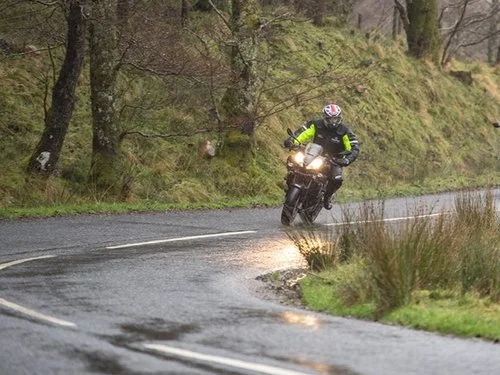
So I should take different lines in the wet?
Exactly. On a dry day with a road surface like sandpaper you can ride the perfect line for view, using as much of the road as possible to see through the corner, then creating an apex when you can see the exit. But on a wet road, you often need to compromise that line because your speed will have dropped off slightly, so you probably don’t need as much vision, but you do need better grip. And that will probably mean riding somewhere slightly different to avoid low grip areas. You need to be able to stop the bike within your vision, and in the wet, that might be easier to do if you’re riding on a grippier patch of road than if you have slightly more vision.
How about roundabouts?
It’s the same principle as above. Around wet roundabouts you’re looking for the line that keeps you the most upright. Straight line when it is safe to do so, if not, lose speed and keep your head and vision up and relax – fixating on the surface will add to your tension.
How do you feel for grip in the wet?
With difficulty and thousands of hours riding experience. You usually get a feeling of slight uneasiness, sometimes a mild floating sensation, as you approach the limit. It’s the sort of thing you should only learn on track because at least if you go over the limit you probably won’t hurt yourself.
And finally, what about tyres?
If you’ve got modern sport-touring tyres, there is absolutely no reason why you can’t have a brisk, smooth, enjoyable ride in the wet. Full-on trackday tyres can be treacherous in the wet because they are designed to operate at a temperature that you’ll struggle to achieve in the wet. Consequently, they’ll usually offer far less wet grip than a decent sport-touring tyre. And of course cheap (or old) tyres with a low silica content are also unlikely to work well in the wet.