
We hear it mentioned all the time, ‘reading the road’, like it’s a language we can learn to help us ride faster and safer, but if you wonder what it really means, chances are you are not alone.
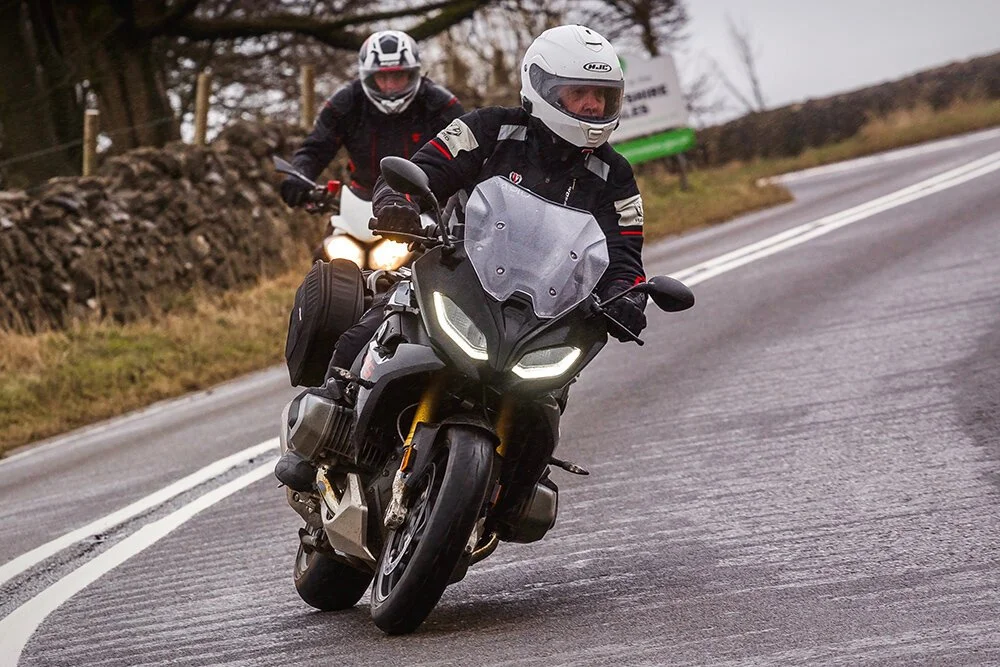
But no, it’s not just throwaway jargon used by advanced riders, it is in fact the cornerstone of every fast, safe ride, and understanding it and mastering it will transform your riding. And like any other skill, your ability to read the road will develop in relation to the amount of time and effort you put in.
Great riders can observe and interpret much more information and detail a lot earlier and at higher speeds than good riders, who do better than novices. Practice is key.
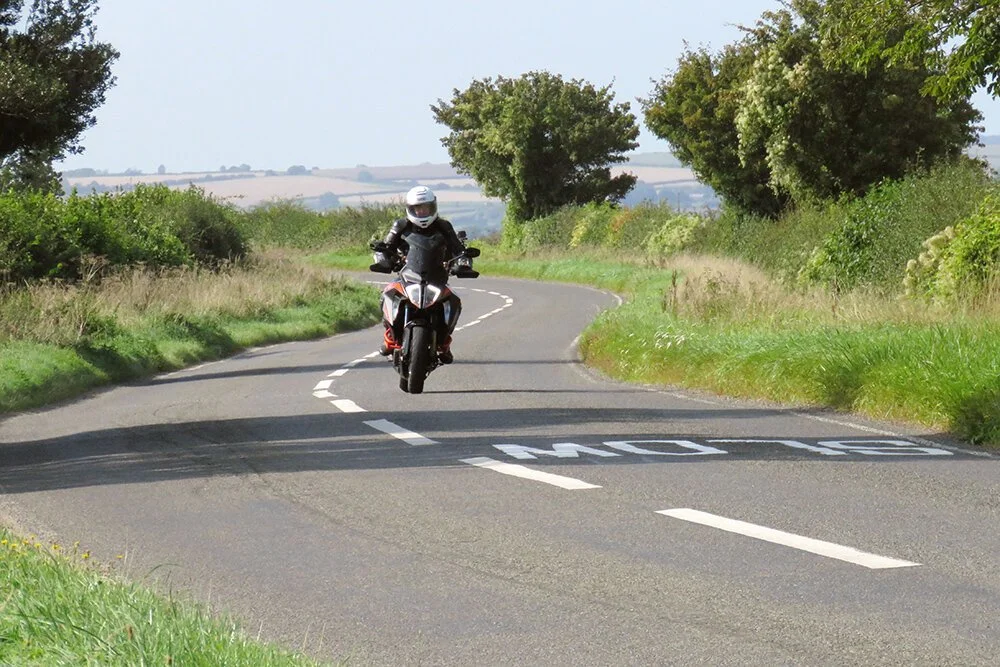
So, what does it actually mean? Well, it means absorbing information and making sense of what you see, and then accurately assessing the implications for your riding. It means spotting the top of that truck across the hedgerows, approaching your position, it means detecting the road signs in front, warning of an S-bend, it means identifying the hidden junction just ahead.
Bike positioned towards the centre of the road to maximise the view through the bend. SLOW sign warns of potential dangers.
Which leads onto the next question, how do you do it? And the answer to that is to develop the ability to observe and process information as early as possible. Fundamentally, this is broken into two parts:
Observation
Gather information early. Look ahead: the sooner you see the potential hazard, the more time you’ll have to adapt your riding.
Gather detailed information. Don’t just see there’s a bend approaching, what about the surface, the camber, the visibility through it, is there a crossview to show you any oncoming traffic?
Do this continuously. You need rolling road vision, continuously scanning the road ahead and updating the information you have available.
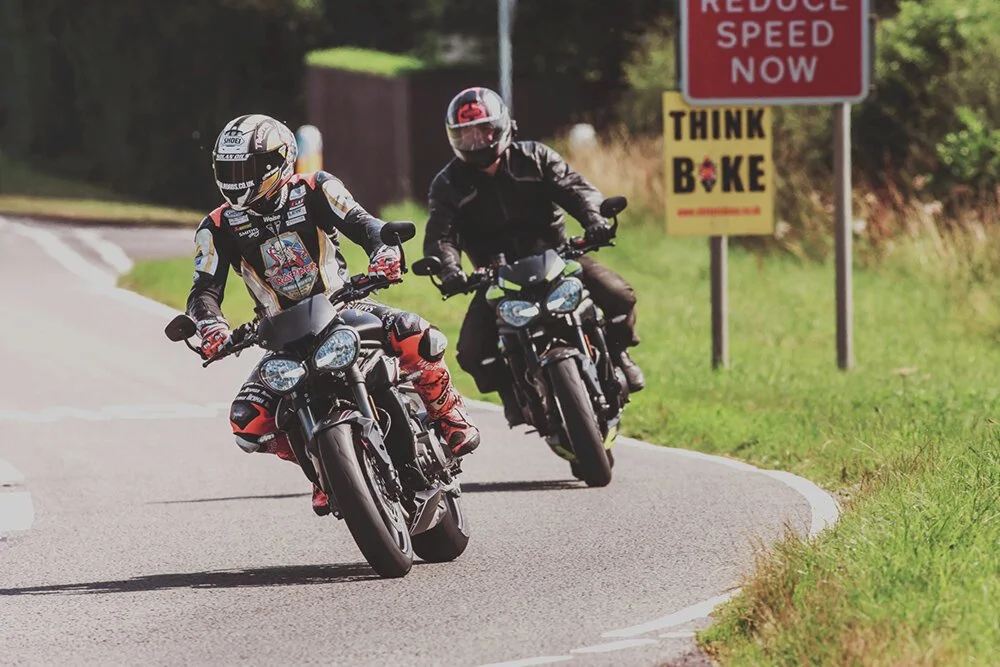
Interpretation
Seeing what’s ahead isn’t enough, you need to understand the impact it may have on your riding. Will it change where you position your machine, your speed, your point of focus?
To help interpret the information, apply the simple ‘so what?’ test. You spot adverse camber up ahead, so what effect could that have on machine handling and grip, or you see an empty ride road junction, so what could appear or pull out?
Developing those abilities is like developing any other; practice. The ability to read the road will undoubtedly make you a better, faster, safer rider, but practice is the only way to get there.
Start slow and go for detail. Make a conscious effort to look for new information and focus on gathering as much as you can. The more you do both of those, the more time you’ll have to react. From there build up the speed. The faster you go, the more skill it requires.